What is the Great Migration?
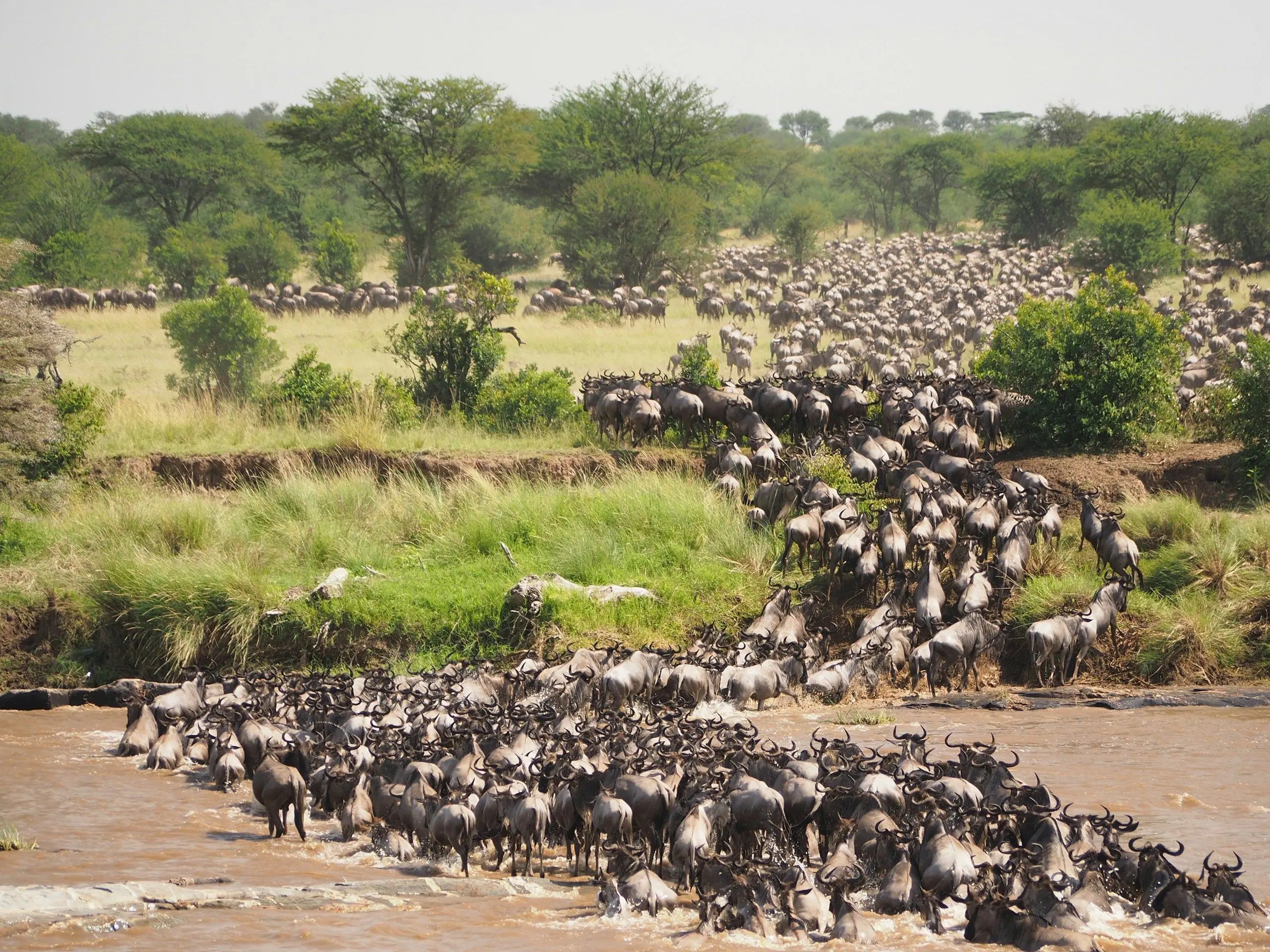
The Great Migration is the year-round movement of around 1.5 million wildebeest, together with hundreds of thousands of zebra and gazelle, around the Serengeti–Mara ecosystem. The Serengeti in Tanzania and the Maasai Mara in Kenya are two parts of the same ecosystem, with no fence between them. The herds follow the rain and fresh grass in a rough clockwise loop, and lions, cheetahs, hyenas and crocodiles follow the herds.
There is no single start or finish: the migration is happening every month of the year. The question is not when it happens, but where the herds are when you travel.
Where the herds are, month by month
| Month | Where the herds usually are | What to expect |
|---|---|---|
| January | Southern Serengeti and Ndutu (Tanzania) | Herds graze the short-grass plains; calving begins late in the month |
| February | Southern Serengeti and Ndutu | Peak calving: thousands of calves born each day, with intense predator action |
| March | Southern Serengeti | Calves growing stronger; herds start to gather and drift north-west |
| April | Central Serengeti (Seronera, Moru) | Long rains; herds on the move; fewest visitors and lowest rates |
| May | Central and western Serengeti | Long columns of wildebeest; the mating season (rut) begins |
| June | Western corridor (Grumeti River) | Grumeti River crossings, with large crocodiles waiting |
| July | Northern Serengeti; first herds reach the Maasai Mara | Mara River crossings begin, usually from mid to late July |
| August | Maasai Mara (Kenya) and northern Serengeti | Peak season for Mara River crossings |
| September | Maasai Mara and northern Serengeti | Crossings continue in both directions; herds spread across the Mara plains |
| October | Maasai Mara, starting to move south | Herds begin to leave the Mara; fewer vehicles than August |
| November | Eastern and central Serengeti | Short rains; herds stream south |
| December | Southern Serengeti | Herds return to the short-grass plains ahead of calving |
These are typical patterns, not a timetable. The herds follow the rain, so an early or late rainy season can shift everything by a few weeks. Good guides track where the herds are day by day, and so do we when we plan your trip.
When to see the river crossings
The dramatic crossings of the Mara River usually happen from late July to September, sometimes into October. Thousands of wildebeest gather on the bank, hesitate, and then plunge in, while crocodiles wait in the water. There is no schedule: a herd can gather for hours or days before crossing, so the best plan is to give yourself several full days in the area.
In Kenya, the crossing points are in the Maasai Mara National Reserve, along the Mara River. In Tanzania, they are in the northern Serengeti around Kogatende. The Grumeti River crossings in the western Serengeti, around June, are smaller but less crowded.
Kenya or Tanzania: where should you go?
- July to October: the Maasai Mara in Kenya. It is easy to reach from Nairobi by road or a short flight, and it is the most compact place to see the crossings.
- January to March: the southern Serengeti and Ndutu in Tanzania, for the calving season. From Nairobi, this means crossing the border at Namanga and travelling via Arusha, or flying.
- June: the western Serengeti for the Grumeti crossings.
- Any month: both parks have resident wildlife all year, including the Big Five in the Mara and the Ngorongoro Crater next to the Serengeti, so a safari is rewarding even when the herds are elsewhere.
With enough time, many travellers combine both countries: the Serengeti and Ngorongoro Crater, then north into the Maasai Mara.
Frequently asked questions
What is the best month to see the Great Migration?
For river crossings, August and September in the Maasai Mara or northern Serengeti. For calving and predator action, February in the southern Serengeti.
Is the Great Migration in Kenya or Tanzania?
Both. The herds spend most of the year in Tanzania's Serengeti and are usually in Kenya's Maasai Mara from about July to October.
Can you guarantee a river crossing?
No one can. Crossings depend on the herds, the rain and the river. Spending three or four full days near the river in August or September gives you the best chance.